
Podcasts: Adolescent Medicine with Dr. Risa Fridy
Raising Resilient Teens in the Age of Social Media: Eating Disorders, Looksmaxxing & What Labs Really Matter
July 12, 2026
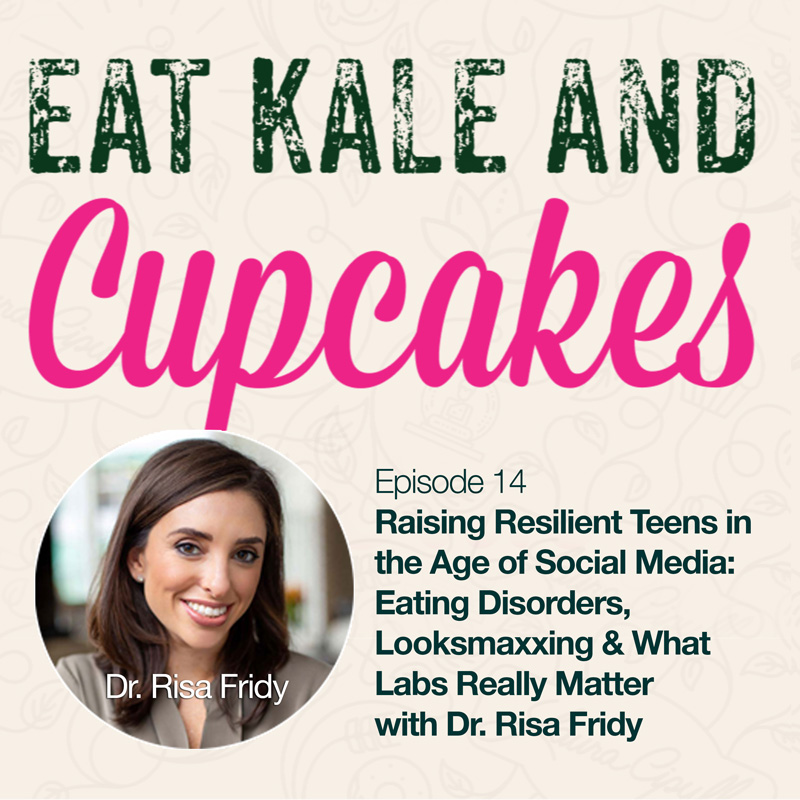
How do we raise resilient teens in a world shaped by social media, appearance-driven trends, and rising mental health challenges?
In Part 2 of our conversation with adolescent medicine physician Dr. Risa Fridy, we explore why adolescence is one of the most important—and misunderstood—stages of development. We discuss how the developing brain influences decision-making, emotional regulation, and risk-taking, and why caring for teens requires a different approach than caring for adults.
From viral trends like looksmaxxing and the pressure to achieve the “perfect” appearance to understanding why eating disorders often function as coping mechanisms rather than simply being about food, we unpack the biological, psychological, and social factors shaping adolescent health today.
We also take a deep dive into the medical aspects of eating disorders. Dr. Fridy explains why clinicians look beyond body weight when assessing recovery, why laboratory values must always be interpreted within the clinical picture, and why markers like T3 can provide important insight into nutritional status.
We discuss sick euthyroid syndrome, the body’s adaptations to malnutrition, and how undernutrition affects the developing adolescent brain—including increased rigidity, anxiety, impaired concentration, and reduced mental flexibility.
Whether you’re a parent, healthcare provider, educator, or simply interested in adolescent health, this episode offers evidence-based insights for supporting teens with compassion and understanding.
In this episode, we discuss:
- Why adolescence is a unique stage of brain development
- How the prefrontal cortex influences decision-making, emotional regulation, and impulse control
- The impact of social media and appearance-focused trends like looksmaxxing
- Practical ways parents can build resilience instead of perfectionism
- Why eating disorders often serve as coping mechanisms rather than simply being about food or weight
- Why eating disorders require long-term multidisciplinary care
- How malnutrition changes the developing brain, leading to cognitive rigidity, anxiety, and reduced mental flexibility
- Why clinicians monitor much more than body weight during eating disorder treatment
- Why “normal” lab work doesn’t always mean adequate nutrition
- Why T3 is an important marker of nutritional status
- Understanding sick euthyroid syndrome and the body’s response to undernutrition
- Why weight restoration doesn’t always mean complete medical recovery
Key Takeaways:
- The adolescent brain continues developing into the mid-20s.
- Resilience, connection, and emotional safety are powerful protective factors against mental health challenges.
- Eating disorders are complex biopsychosocial illnesses—not lifestyle choices—and often develop as ways to cope with emotional distress.
- Malnutrition affects every organ system, including the brain, impacting thinking, concentration, and emotional regulation.
- Healthcare providers interpret symptoms, growth, vital signs, physical exams, and laboratory trends together—not in isolation.
- Low T3 and sick euthyroid syndrome are common physiologic adaptations to undernutrition and do not necessarily indicate primary thyroid disease.
If you enjoyed this episode, be sure to listen to Episode 13: Adolescent Medicine 101: What Parents and Clinicians Need to Know (Part 1) for the foundation of this conversation.
Adolescent Medicine 101: What Parents and Clinicians Need to Know with Dr. Risa Fridy
June 28,2026

What exactly is adolescent medicine—and when should a teen see an adolescent medicine specialist instead of their pediatrician?
In this episode of Eat Kale & Cupcakes, Laura Cipullo and Shannon Herbert sit down with Dr. Risa Fridy, an adolescent medicine physician, to unpack this often-overlooked specialty and why it can make a profound difference during one of life’s most complex developmental stages.
From eating disorders and mental health to puberty, chronic illness, gender-affirming care, reproductive health, and navigating social media, adolescent medicine takes a whole-person approach to caring for teens and young adults.
Dr. Fridy explains how adolescent medicine differs from traditional pediatrics, shares real-world clinical examples, and discusses why having time to truly listen to adolescents—and their families—is essential for providing effective, compassionate care.
In this episode, we discuss:
- What adolescent medicine is and why the specialty exists
- How adolescent medicine differs from general pediatrics
- When parents should consider an adolescent medicine consultation
- Common reasons adolescents are referred to specialists
- The importance of holistic, multidisciplinary care
- Early and subtle signs of eating disorders
- The role social media plays in body image, self-esteem, and adolescent health
- Practical advice for parents, clinicians, and caregivers supporting adolescents
This episode is for:
- Parents and caregivers of tweens, teens, and young adults
- Pediatricians and primary care providers
- Registered dietitians
- Mental health professionals
- School counselors and educators
- Anyone interested in adolescent health, eating disorders, or preventive care
VIEW FULL TRANSCRIPT: Adolescent Medicine 101: What Parents and Clinicians Need to Know with Dr. Risa Fridy
Episode 13: Adolescent Medicine 101: What Parents and Clinicians Need to Know with Dr. Risa Fridy
0:05
Welcome to the Show and Meet Dr. Risa Fridy
Welcome to E Kale and Cupcakes.
I’m Laura Sapulo, registered dietitian amongst other things.
0:12
Speaker 2
And I’m Doctor Shannon Herbert, registered dietitian amongst other things.
0:16
Speaker 1
And today we have with us our friend and colleague, Dr. Risa Friday.
Hi, Risa.
0:24
Speaker 3
Hello, thanks for having me.
0:26
Speaker 1
Thanks for joining us.
What are we talking about today?
0:33
Speaker 3
Well, we are talking about a lot of things, but I am an adolescent medicine physician and for our listeners, I work very closely with Laura and Shannon and dietitians a lot.
So I’m here to explain to you what I do and all about the patients I see and how I collaborate with other healthcare providers in my field and sort of share some light on anything that Laura and Shannon want to know.
1:01
Speaker 1
Yeah.
And just so for our listeners or viewers to know, Doctor Friday and myself met a long time ago while I believe you were a resident or perhaps a fellow.
We lived in the same apartment building in New York City.
1:18
And so it’s just a small world.
And we realized we both specialized in eating disorders, amongst other things.
And so the relationship began.
1:29
Speaker 3
Yes, we have known each other for a long time.
1:31
Speaker 1
Yeah, super cool.
It’s really nice to collaborate with people that you know, you know and have a relationship with so that you can collaborate on a regular basis and know their values.
1:42
Speaker 3
Yeah, absolutely.
Yeah, that is important.
1:46
Understanding Adolescent Medicine vs. General Pediatrics
So tell us a little bit about what is adolescent medicine and how does that differ from being a pediatrician?
Because we will want to get into how does adolescent medicine and nutrition work?
And you know, what is it that you’re seeing in the the culture right now of raising an adolescent?
2:07
Speaker 3
Yeah.
OK, so let me explain a little bit about what adolescent medicine is, because I think that it’s not really well known.
I think it’s not really well understood, even if people have heard of it.
But at the number of times I’ve heard I’ve, you know, someone has asked what I do or what kind of physician are you?
2:23
And I say I’m an adolescent and young adult physician.
And they’re like, what’s that?
So it’s really a very an unfamiliar field to a lot of people, which is disappointing because it is, in my opinion, obviously biased such an important field.
So I am a pediatrician by training.
2:40
I am a board certified pediatrician.
Many, but not all adolescent medicine physicians are.
Adolescent medicine is a board certified specialty.
So after my Pediatrics residency for three years, I then did three more years of a fellowship in adolescent medicine.
2:58
Any physician theoretically could go into adolescent medicine, but you already have to be boarded in a general specialty.
So you either have to be an A pediatrician, an internist, or a family medicine physician.
So it is a sub specialty.
3:14
So a lot of years, which you know, sounds kind of crazy, but I think adolescents and young adults are so incredibly complicated and we have a we wear a lot of hats within the field and a lot of us in the field end up sort of sub specializing even further.
So in our training and our three years, I would say here’s kind of the the rainbow of, of subject matters that we sort of learned to specialize in.
3:41
We work a lot with nutritional and metabolic health and specifically eating disorders, because eating disorders really are quite rampant in the adolescent and young adult population while they spread, while they cross the spectrum of ages, unfortunately that that is the the hub, I would say.
4:00
So we do a lot of work with nutrition, but then also metabolic issues across the spectrum, all different types of eating disorders and all different types of metabolic issues.
We do a lot of sexual and reproductive health.
So everything you can think of from general, primary sexual and reproductive healthcare, a lot of puberty work.
4:22
So whether it’s early puberty, delayed puberty, abnormal puberty, bothersome or painful symptoms of puberty and everything in between, and then also sexual health.
So sexually transmitted infections, screening and treatment.
4:40
We do contraception.
I personally put in intrauterine devices, IUD’s and subdermal implants in the arm for birth control.
So all along the spectrum of sexual and reproductive health, we do pap smears.
We do it all if a patient’s old enough.
4:57
And then we also do a lot of mental health.
We are not psychiatrists, we are not therapists, but because of the age group that we work with, we have a lot of training.
So during fellowship, we do a lot of overlap with therapists and psychiatrists in the hospital and we learn a lot from them.
5:15
And so we really incorporate a lot of modalities into our work.
And generally, I would say adolescent medicine physicians are highly sort of psychiatrically aware because I think there’s something that makes you interested in this population that you tend to have a really good understanding of the mental health of this age group.
5:36
So it’s it really is incorporated into a lot that we do and more.
I mean, there’s a lot more nuance to it, but I would say those are like the top three areas.
5:47
Uncovering Hidden Concerns with a Holistic Approach
And for really any patient that walks through our door, I think one of the things that makes us really specialized is that you might come in for, I don’t know, like a wart on your finger.
And we will end up doing a whole psychosocial exam and history around your sexual health, around your mental health, around your, you know, nutritional health and sort of uncover things.
6:12
So most patients don’t walk in and out the door with the same list of of concerns because we really unroof a lot of things and and get into it.
6:22
Speaker 1
Yeah.
And I think that’s so important because there are so many clients or just adolescents.
I think that parents or therapists, maybe they’re not aware of questions to ask, right, related to psychiatric well-being or especially to eating disorders, especially in this quiet or in this culture of looks maxing.
6:47
I’m really thinking about the boys that, you know, I really feel there needs to be a specialist and almost a better list available to parents and or practitioners, maybe even the pediatrician of like, what do I ask and look for, you know, to see is this individual struggling with body image and how is this affecting them?
7:08
Or even perhaps are they, you know, constipated?
And it’s not about increasing fiber.
It’s really because the kid is so strung out right from the stress of the culture or for looking a certain way.
And therefore they are, you know, super tense in their physical body and maybe actually need to be referred for pelvic floor therapy rather than increase their fiber, right?
7:36
So it’s like there’s so many nuances.
7:38
Identifying When Your Teen Needs an Adolescent Specialist
So I do think that the specialty is so necessary and I wish more, more individuals were aware of seeing an adolescent specialist, you know, and again, it depends on the kid.
7:55
I actually have one kid that sees an adolescent specialist, right?
And then I have one kid that doesn’t that sees the regular pediatrician.
So and any, any advice for parents on how to identify if you need an adolescent specialist or maybe what would be helpful in identifying, you know, for them if their child would benefit from seeing someone like just switch over from like at what age from a pediatrician to the adolescent medicine person and you know how it could potentially be beneficial for that individual or maybe the family.
8:32
Speaker 2
I was going to say, like that age range that you’re typically working with and seeing and like what falls under the purview of like adolescent medicine.
8:38
Speaker 3
Absolutely.
It’s a great question.
OK, so so first just to answer the age range it I wouldn’t say so.
I’m in private practice, which is definitely a little bit different because we have a little less rules to follow than a hospital based practice.
But in general, adolescent medicine tends to start with the pre teenage and you could call that even 10.
9:00
I would say puberty tends to be like early signs of puberty tends to be a sign that maybe we’re ready.
And then true adolescent medicine, the subspecialty in most hospital based practices goes up to either 21 or 25.
It sort of differs a lot of times in the hospital and I, I joke because in my, my practice specifically is called Tribeca adolescent and young adult medicine.
9:26
Because just because someone suddenly magically turns 21 or 25 does not mean that they, their brain matures to the way that they stop engaging in risk taking behaviors or that their puberty, it happens to be fully finished or whatever it may be.
9:42
And so my age has has pushed up and up over the years that my practice has been open.
And originally I capped at 30.
So I saw patients all through their 20s and then I inched it up to 35 when my patients were getting older.
And now I actually will take patients up through 40.
9:59
Typically the patients that I’m seeing are really in that young adult profile of risk taking behaviors or have active eating disorders.
And unfortunately, the care that specializes in a lot of what I do in the internal medicine world, adult world is very difficult to come by.
10:15
So it’s not just that the pediatricians are limited, the internists are limited too.
So the the my practice model and the age group that I serve and the issues specifically that I work on are very specific to my patients where the ages themselves are a little more flexible.
10:33
Navigating Puberty, Weight Changes, and Parental Anxiety
Right.
So maybe for, for, for listeners, you know, it’s the age of 10 to start thinking about, you know, would an adolescent medicine doctor be appropriate 10 and on.
And then the, you said something about the signs of puberty, you know, and I think of signs of puberty as maybe underarm hair, the breast budding rate or I think a change in weight, right?
11:02
Because a lot of times before puberty, the children start to gain weight more rapidly or hold onto a weight, a little bit of weight.
And this is where maybe the parent gets nervous.
And I mean, we see a lot of kids coming in from the endocrinologist that, you know, the, the kid is maybe 9 or 10 or 11, their weight has, you know, skyrocketed or that they’re holding a lot of weight in their belly.
11:29
And some of that’s just natural and necessary because they’re getting ready for puberty.
So, you know, can you just speak a little bit more to that and maybe a parent see that again, like the benefit of going to even the adolescent medicine doctor is that you may be Privy to or have more time and access to understanding the individual.
11:50
And is there an eating disorder about to bud or if we restrict them, will that cause an eating disorder?
It’s a great.
11:58
Speaker 3
Question.
I think that one thing that in our training and just our awareness of eating disorders and, and just our experience of working with patients day in and day out with eating disorders, I think when I approach a patient, I am a new patient specifically, I am really looking at the whole picture.
12:19
I am looking at the data in front of me.
And I, you know, I always say my job is so much easier than the therapist job in certain ways because I have the data.
I mean, I have numbers, I have lab results, I have growth curves, I have the vital signs that I take in the office.
Those are extremely helpful, but they’re not it.
12:36
And if a physician is only looking at the data, that’s a very limited view, Then I am looking at my conversation with the patient.
I’m having a really, really detailed conversation around food, food habits, food beliefs about weight, about body, about how they feel in their body, about friends and who they spend their time with and what and family members and what they eat and what just the eating culture is like.
13:02
I mean, we really get into this a lot of times.
And, and I will definitely say that that conversation might be guided by the data.
So I might see a huge jump in a growth curve or I might see a big plummet in a growth curve, which that’s definitely going to set up some play more so than a jump, by the way.
13:21
And that will really lead to a conversation.
And then I will have a conversation with parents, depending on the age of the of the patient for even more information.
13:32
A Teen’s Weight Loss and Uncovering Family Habits
I can give you a perfect example of a patient I just had this week that I think will like, you know, this is a, this is just, it’s perfect for the conversation I had a, an 18 year old.
She is a wonderful kid.
She is like, you know, one of those highly impressive, highly motivated, the president of three organizations.
13:52
She’s you know, she’s straight A she’s going to an Ivy League school next year.
She’s she’s an awesome kid, very, very enjoyable when she comes into the office and truly healthy.
I mean, she’s really a primary care kid.
Her parents brought her to me because she turned.
14:08
I don’t know, I think I’ve been seeing her since she was 13 maybe.
And it just was, it worked out well, but I really just do primary care for her.
But in every single visit since she’s been, you know, a little munchkin to now an 18 year old.
We’ve talked about all of it, like sex, drugs and rock’n’roll, you know, and then really we get into eating and family dynamics and all that.
14:29
Like I said, really good kid, healthy, not really any red flags over the years.
And she has been on this growth curve and she’s been a very normal eater.
And the family are really pretty, you know, well balanced eaters.
We talk about their their diet culture at home and it’s really very healthy diet culture.
14:48
I just used in the wrong way.
I meant like they’re, they’re like.
14:52
Speaker 1
Their food culture.
14:53
Speaker 3
Their food culture, Yeah, yeah.
14:55
Speaker 1
How do they?
14:56
Speaker 3
How do they?
14:57
Speaker 1
Speak about health and how do they speak about food?
14:59
Speaker 2
And maybe we’re re framing what diet culture really should be all about.
15:03
Speaker 1
Right.
Yeah, and my thing is, diet shouldn’t be the bad word anyway, because diet actually is about how do you nourish on a daily basis.
Diet has been basically that that the word of diet has been interpreted or really forged into restriction, but that was not the original definition.
15:28
If you look up in Webster’s, you know, and I mentioned this in many of my books, right, that you’re a.
15:32
Speaker 3
Dietitian.
15:33
Speaker 1
Right.
Like that’s that’s my job.
Our title has the word diet in it.
So there’s nothing wrong with what your daily diet is if you’re eating enough and adequately.
And again, when you approach the diet, you’re looking at a holistic, you know, approach to thinking of how do you feed this person and help them to understand how to feed themselves, right?
15:57
So go ahead and use diet here.
We don’t think of it, you know, in the restrictive way.
I think we all need to be sensitive to nutrition, right?
And in taking in adequate nutrition is your diet.
16:15
It’s what you take in on a on a daily basis.
So I think we know what you’re talking about.
I hope the listeners know what you’re talking about, you know, But of course, we do have to listen for or ask questions about the food culture in the home and say, you know, or be curious about whether or not you know.
16:33
Are carbs allowed?
Are the parents following?
16:35
Speaker 3
Certain.
16:36
Speaker 1
Restrictive intake right Because those could potentially affect the adolescent because they’re prime for for being sensitive to the parents behaviors and and even beliefs around food.
16:51
Yep.
16:52
The Importance of Language in Food and Body Discussions
Yeah, it’s, it’s so funny.
I, I think just going back to the question of how I’m different or how my field is different.
I mean, just even terms and how we speak about things, whether it’s how we speak about the body, how we speak about food, how we speak about, I think in my world of adolescent and young adult medicine, we really are very aware of language.
17:16
I mean, in that that extends well beyond just food and culture.
I mean, whether it’s talking about gender or whether we’re very kind of in the know, I mean, we have to be, we have to know the cool terms that the young kids are saying.
We need to know the really like not PC terms of the day because that’s what we do all day.
17:34
And so, but when it comes to food and body, I think we’re very sensitive in a different way than, you know, many of the kids that will come in and I will hear stories of them being admonished by their pediatric.
I mean, I can’t even tell you the stories that it’s still to this day I’m hearing about a kid crossed one growth curve and the pediatrician just admonished them for eating ice cream after school with their friends.
17:58
And the kid was, you know, 8 and went to ice cream after school with their friends.
And it’s just, it’s the, it’s the whole picture and how you, you use your language to approach what might be a concerning trend as a doctor that you’re seeing.
And you don’t want to not approach it or it might not be.
18:15
And you have to be able to flush that out appropriately.
So, OK, so let me go back to this patient.
So I take this patient’s weight at the end and I made a mistake and I will admit that I didn’t.
18:32
In the visit, we had looked at all the different things and then I hadn’t like really looked at the weight full, the full weight trend over the years.
We had gotten into a long conversation about some other things and I had taken the vital signs and honestly, we did a whole food nutrition talk.
18:47
She’s, like I said, really well balanced all the things and she basically left my office.
I talked to her alone.
I talked to her mom at one point, but she’s over 18.
So really it was much less about the mom, although the mom was there and left.
I went back to my computer a few hours later and I was doing my notes and I was looking at her growth.
19:06
I took a look at her growth curve and I went, Oh my God, She has lost 17 lbs this past year.
And I had seen her for one or two visits halfway through the year and you know, she’s like I said, she’s not like a frequent flyer.
She came in once for strep and came in once for like a rash and the weight hadn’t been anything concerning really at that point.
19:28
And then she had not been in my office for about 8 months and I went, whoa, she’d already left my office.
I’m like, Oh my God, OK, what is going on here?
I did a full nutrition intake.
Everything seemed normal.
I asked about body image.
You know, one difference was that she was exercising more.
19:44
This is the kid who really had never played sports, never been into it.
And she started to enjoy some workout classes, but it really didn’t seem excessive.
So I said, OK, I need to, I need to make some phone calls.
So I called her.
I asked her, you know, can we speak?
And then we had another talk later in the day.
20:00
And I said, you know, I realized that it wasn’t until after the fact that I look back at your culture.
And we didn’t really speak about the numbers as much as we spoke about the habits and.
To that point, your eating habits sound great, but is there anything I’m missing here?
20:16
You know, it’s really striking that you’ve always been along a very normal curve and suddenly 17 lbs down.
What’s up?
You know, And she said, you know, it really wasn’t anything I noticed.
It wasn’t intentional.
It’s sort of happened gradually across the year.
I have noticed she said, I think that I’ve started exercising more and she really didn’t have a great answer.
20:39
And I was very forthcoming.
I said, look, as a doctor, this is something that really raises some red flags.
But you seem really well around the way we’re talking.
But I’m going to have you come back in.
I’m going to have you come back in, in one month because I just want to make sure that this isn’t continuing.
20:56
She, by the way, she’s still at a very, very healthy body size.
It’s just not the same percentile she had always been on now.
And I said, I’m going to have you come back in one month.
I’m not sounding any alarm bells, but I and I said, would you mind if I speak to your mom about this?
21:13
You know, she’s over 18.
So I just want to make sure that she agrees that there’s nothing she’s noticing.
And the patient said, sure, no problem.
Here’s where I’m going to blow your mind.
Are you ready for this?
Call the mom.
And she said, you know, it’s so funny.
21:29
I don’t really know why so.
And so my daughter isn’t telling you the whole story.
And I said, uh oh, what am I missing here?
Oh, my goodness.
And I was just like kicking myself that this hadn’t come up in person, not that they had brought it up, but.
And she said, here we go, guys, you ready?
21:46
She said my husband and I, so the mother and the father, have been on a GL P1 this year.
We felt like it was something we wanted to do for ourselves.
And because of that, our eating habits in the home have really changed.
22:02
When we go out to dinner as a family, we’ve stopped ordering appetizers.
A lot of times we haven’t been hungry for dessert and our kids and there’s two kids in the family just sort of eat the way we eat in the home.
And since our whole home has changed some of their some of our eating habits, they are eating just less or different foods than they used to.
22:26
And I will say the mother was very much like, this is actually something we’ve talked about in the home where we brought it up, we’ve explained it.
We talked about why we’ve made this decision and why we want our kids to keep eating wholesomely.
And the kids are both very healthy, it seems.
22:44
And she also mentioned the exercise.
She said this is something that finally, at this age of 18, my daughter has taken an interest in.
And I said, listen, I’m hearing all of this.
Thank you for sharing.
I appreciate the honesty.
And there’s not necessarily a judgement here, but I am going to say this is something I’m now suddenly aware of.
23:04
I want to see your daughter again in one month.
I want you to keep a lookout before she goes to college.
I want to make sure this this weight loss trend is not something that’s continuing.
And that was how we left it.
You know, I think I made myself clear that like, we are all now on the lookout here, but you know, I’m not necessarily freaking out, but I’m very aware.
23:27
The Value of Dietitians and Therapists in Teen Health
Would you perhaps refer to a dietitian who specializes in eating disorders at this point just to have second eyes on the individual and see if in that more like holistic and or therapeutic food environment that they could feel comfortable to open up and, and speak to what else is going on?
23:56
Or even potentially even a therapist at this time, knowing that there’s a transition happening, a transition with the food in the family, a transition with, you know, going from a high schooler to a college.
24:12
Because I think Shannon and I see often that, you know, because 17 lbs.
Honestly, even if a person is, you know, like if that’s their normal percentile, like in my experience that there’s 17 lbs.
24:30
Speaker 3
It’s a lot.
24:31
Speaker 1
Like that’s pretty significant.
I’m thinking they’re dropping at least one to two percentiles on the growth chart, right?
And you know, I think also as a as a dietitian, you know, who works at multiple ages and as a parent of a 19 year old and a 17 year old, it is so easy to miss things.
24:58
Oh.
24:58
Speaker 3
Yeah.
24:59
Speaker 1
And you know, I, I feel that, you know, you have to ask these young adults in multiple ways and have multiple people asking the questions to really find what is their truth.
25:19
And a lot of the adolescents aren’t even aware right until you’re really exploring it.
But I think that there’s this very small window that we may have into preventing this from spiraling into something bigger.
25:38
And so.
25:41
Speaker 3
I, I could not agree with you more, Laura.
I couldn’t.
It’s interesting.
So the patient has a therapist.
The patient has a therapist really, which actually took quite a lot of convincing for me over the years, really only because of this very perfectionistic tendency.
I mean, in a lot of ways we’re talking about a patient who’s very set up for this, right?
25:59
They’re they’re completely.
26:00
Speaker 1
Set up please.
26:01
Speaker 3
Say.
26:02
Speaker 1
They literally when you were speaking to how perfect right they are.
IV all of these rate and in a transition.
So anytime our child or adolescent or young adult is in a transition, this is the time to be mindful that again, an eating disorder could develop, substance disorder could develop.
26:25
And or again, I, I don’t know, you probably have a, a longer list than I do you know, of, of what happens in transitions at this age range.
But yeah.
26:36
Speaker 3
Yeah, so, so I actually, so I’m as I do in my practice all the time, I would say my threshold for have referring patients to dietitians and or therapist is very low.
So this is a patient who for years I’ve wanted to see a therapist really not necessarily because of anything in particular.
26:56
In fact, this is a patient doesn’t really endorse much anxiety.
She’s fairly just kind of go with the flow, Although I think that’s more of a outward portrayal of that’s just my opinion, but I’m not, you know, but she does speak with the therapist now.
And I said to them, I’ve always been in touch with their therapist.
27:12
I’m just going to give your therapist a call.
27:14
Speaker 1
Love it, and I love that you have the ability to do that right.
27:19
Speaker 3
Oh my.
27:19
Speaker 1
Gosh, that you know the adolescent has signed because remember, when someone is 18 and over, parents don’t have the ability to just call the doctor and share any information or to get information, right?
27:34
Speaker 3
I even had to ask her permission to even have this conversation with her mom, which I’m actually wondering looking back.
I mean, the situation was who, let me tell you, when I, when I saw that and realized that we hadn’t actually gotten into it in the visit, Oh my God, my heart sank.
27:51
Like let you know you, everyone makes mistakes, but I was like, oh God, I have to be able to review this.
And luckily I did.
But I, I wonder if one of the reasons it maybe hadn’t come up in the visit was, you know, it’s all the things you start thinking about all the things.
And so believe me, I’m on, I’m on high alert.
28:08
But I asked for permission to speak with the mom and she let me, which is great and just sort of putting the mom on alert is part of it.
But I did I do sort of have on my in fact, if you read my note, it was come back in one month.
28:24
If anything has continued.
If there are any more concerns, we have about 2 1/2 months till college dietitian referral for you know, whether it’s reviewing meals just we were going to get into it.
28:39
We’re going to really not let this.
I’m giving them the one month to come back and show me that things are stable.
And if they’re not, then we dive in.
28:53
Recognizing Subtle Signs of Eating Disorders in Teens
When we’re thinking, no, I was thinking because we’re thinking.
28:56
Speaker 2
OK, we saw this drop in the weight, and this might not be just for this patient specifically, but what are some of the subtle signs that providers and also parents might be missing because it’s easy to miss things?
What are some things they should maybe be on the lookout for before things escalate?
29:11
Speaker 3
Yeah, ’cause I mean, I would say this is one of the least subtle.
Subtle.
Yeah, yeah, yeah, yeah, absolutely.
I mean, being on the lookout is having the time and the ability to really have those discussions that I was talking about.
29:30
I would say one of the things that I think I really ask a lot of is body image questions.
How do you feel about your body?
How do you feel when you get dressed?
How do you feel like you know, how do you feel when you’re going out to hang out with someone in after school?
29:47
How do you know?
And sort of just sort of reading the answers there and, and seeing that side of things because even if something’s not necessarily yet being reflected in behaviors around food or exercise, there might be a lot of the inner negativity.
30:08
And that’s where I think it starts.
I want, I wish for everyone to feel really great in their skin and like themselves and confidence.
And especially in the adolescent age group where your body is changing rapidly, it’s changing in ways that are very foreign to you.
30:24
You look drastically different.
A few, you know, three years prior you looked like a completely different person.
And it’s, it’s really hard to, and you might look at like a completely different age than your peers.
You know, everyone changes at such different times.
30:41
And so I think just finding out how my patients feel in their body and it’s not always weight related.
It could be about their skin, right?
We talk about skin constantly, acne and just skin changes.
We talk about hair, hair, everywhere on the body.
30:57
I mean, I really try and be open with my patients about how they feel in their own skin.
31:02
How Social Media Affects Teen Body Image and Privacy
I think the other thing is, you know, also, I just remember this from growing up too.
You know, it’s like the size of everybody’s private parts, right, right.
Like again, like, are they like flat?
Are they are they, you know, made fun of or, you know, viewed by the, you know, the opposite sex because of, you know, again, something that that has been maybe made aware of by a peer.
31:29
You know, I was just reading this morning something and actually, I think I believe I sent it to both you and Shannon.
But really speaking to that, there are these apps now that really focus on kids appearance or even perhaps will like people might take pictures of somebody eating lunch and then to these apps and then they make fun of somebody and it could be just anybody.
31:55
And if you get posted on that, now you’re going to going to be self-conscious about eating your lunch because and not want to eat lunch at school because people are taking pictures of you and posting you pictures of you eating right.
Or I’m, I’m very Privy to how a lot of individuals, you know, my clients share this, how they, you know, if someone goes out on a date and you know, they, they basically it’s when, when the, the individual comes back home and they share it with their friends or maybe they Snapchat something, then that becomes everybody’s date, right?
32:36
And so you know, the, the person that they went out with now, like, again, do they know if, whether or not they’re a good kisser, you know what, what their breath smell like, what, like they know all these intimate details through these apps and through Snapchat and things like that.
32:52
And I’m just like, Oh my goodness, it’s just nothing is, is private.
It, it’s all open.
And then these kids are subjected or adolescents are subjected to so much, I think negative feedback, right?
So, I mean, I think that’s other things that are, those are other questions we need to start asking about like what, what social media are you on?
33:13
And you know, have you ever been targeted or do you have your picture taken or like what else is going on?
Because there are so many things that I think again, and I have a 17 year old and a 19 year old and I see so many adolescents.
So I’m learning every day and I’m just like, oh, I’m Gee, you know, like I, I feel bad for these kids because they are targeted like no other.
33:39
The HEADSS Exam and Time Constraints in Pediatrics
It’s funny, I was thinking about this at the beginning of the talk, but it’s coming up again now.
You know, you ask about the difference in in my visit than a pediatrician’s visit, let’s say.
Now, when you’re in medical school and you learn about taking care of teenagers, you know, taking care of an adolescent, you learn something called a heads exam, HEADDSS, There’s a few versions of the DS and the s s, but this is like the psychosocial social history that you’re supposed to take for an adolescent.
34:08
And I remember being in, I’m going to tell you what it all stands for, but I just remember being in my Pediatrics residency and I always loved adolescence.
This is what I wanted to do.
But in pedia, in the world of Pediatrics, you are seeing so many patients and you have so little time.
You have it, you have a panel of of kids coming in and out of your office.
34:26
You’ve got screaming babies.
It’s really, really, really exhausting.
And you’re supposed to sit down with an adolescent and go through this heads exam in the middle of your visit.
And maybe you’re allotted 15 minutes for a follow up.
And the heads exam is home life, education activities.
34:46
The D can be various things, dating, it can be depression or mood, it can be drugs.
And then the S can be substance use.
Like you can kind of add sex and there’s a, there is a proposal now and I really do this, actually, I truly do adding an SN for social media use.
35:07
You can add the SN for safety.
Just like to talk about, I mean, literally you’re supposed to talk about everything from do you wear seatbelts in your car to bike helmets when you ride your bike to, you know, are you smoking cigarettes?
So it’s to get through a heads exam just to ask all those questions.
35:27
If one of the answers is anything concerning, you want to delve into that.
How do you get through all of them?
And most of these adolescents have a lot going on.
You’re going to get the substance use part and say, oh, have you ever, you know, vaped?
35:42
And they’re going to say, oh, yeah, I vape every day.
OK, all right, we got to talk about that.
So it’s hard now in Pediatrics when you’re seeing a ton of patients, you simply don’t have the bandwidth.
You simply do not.
And that’s where one of the problems is.
You know, for my patients, I reserve way longer amounts of time for each of my visits than if you were in a Pediatrics.
36:06
Extended Visits and Personalized Care for Adolescents
Practice.
Could you share with us how long on average do you see an individual patient maybe for their initial and then for a follow up?
36:15
Speaker 3
All right, So let me give you a little bit of context about my practice model.
It’s very unique.
And I just want to say that I am incredibly lucky to be able to practice this way.
And I know that a few years ago I made the decision to not take commercial insurance because commercial insurance is so limiting for how they reimburse physicians for adolescent healthcare.
36:39
There is just simply it’s almost impossible to take good care of adolescents and young adults in that model.
So without the the constraints from commercial insurances, I was able to change all my visit lengths.
So I reserve 2 1/2 hours for an initial visit.
36:57
Speaker 1
Right.
How beautiful is that?
You get to spend 2 1/2 hours.
37:01
Speaker 3
It’s, Oh my God, it’s unheard of.
And you know, and I don’t necessarily take 2 1/2 hours.
It very much depends.
But that allows me, if I have a patient under 18, I can interview their parents.
I often will see the patient alone.
37:18
Well, I always will see the patient alone no matter what the age, but I will often see them alone, then the parent alone, then them together.
It sort of just depends on I, I can be so flexible.
I have so much time.
I can really spend a long time on the exam.
You know, Laura, you brought up body parts and what’s normal the number of times patients say, is that normal?
37:37
And I’ll say, let me show you you let’s talk about it.
Let’s examine, you know, let’s so I have so much time.
That is the first visit.
And I always say to the poor patients who are stuck with me for 2 1/2 hours, I’m like, I promise you no visit will ever be this long.
But again, but it and then I’m so individualized.
37:55
So if if a patient needs to come back for an hour, they come back for an hour.
If a patient needs to pop in for 1520 minutes, they pop in for It’s very much very patient.
38:06
Speaker 1
And I just write and I want to also point out that, you know, this also allows you to speak with someone like Shannon and, or myself, you know, very often when we all have clients, whether or not they have an eating disorder, right?
38:21
Because it could be, it could be a thyroid issue, it could be a GI issue, but it gives us the opportunity to collaborate, right?
So often we have team meetings where you know, you’re meeting with the, the adolescent specialist and, or the therapist, psychiatrist and even the parents, right?
38:42
So that there’s this dialogue and everyone is on the same page supporting the individual in this very challenging time and obviously culture.
38:53
The Impact of Insurance on Quality Healthcare for Teens
So, you know, we too don’t, don’t take insurance because insurance would not reimburse us right, sufficiently to even pay for New York City rent A and again, it doesn’t afford you the time or the, the, the ability to dig deeper, correct.
39:17
Just something that’s on the surface.
And everyone is so complex and everything needs to be so individualized that you you can’t cookie cutter a human.
39:27
Speaker 3
No, you really can’t.
And it’s, it’s really unfortunate that that’s the way that our healthcare system has gone.
I mean, it’s a problem all over the world in different, you know, I, I have, we have an international adolescent medicine committees and we have conferences that have adolescent doctors from all over the world.
39:47
And it’s really fascinating.
But it’s, it is a, it’s a universal problem is the amount of time we have as physicians to spend with our patients.
There’s just never enough.
And then all the background, time of care, collaboration with professionals, it’s so important, a lot of time.
40:08
Speaker 1
Yeah, I mean, I do, you know, I have to say that I am grateful for our our insurance, right.
But I think for different specialties or for different physicians, again, having the ability to work outside of the box is super helpful.
40:24
But I also am grateful for something like, you know, I went through chemotherapy, right?
And I was very grateful to have insurance to obviously pay for something like that.
But, you know, I do wish that we all had, you know, or that everyone had as much time, you know, as we, the three of us have with our clients and our patients.
40:48
Yeah.
40:50
Wrapping Up Part 1 and What’s Next in Part 2
Thanks so much for listening to part one of our conversation with Doctor Risa Friday on adolescent medicine, what it is, and what parents and clinicians need to know.
Stay tuned for Part 2, where we will dive into social media looks, maxing eating disorders in adolescents, and how to raise resilient teens.
41:09
If you’re enjoying the show, please be sure to follow along for more and leave us a comment letting us know what you’d like to hear more of.
You can follow us on Instagram at Eat Kale and Cupcakes and learn more about our work at laurasapulo.com, as well as in the show notes below.
Until next time.
The Medical Complications of Eating Disorders with Dr. Risa Fridy
June 20, 2023

The Medical Complications of Eating Disorders with Dr. Risa Fridy
Rachelle Heinemann is a licensed mental health counselor and a certified eating disorder specialist. On this weekly podcast, we talk about all things psychoanalysis and eating disorder recovery. It’s a combination of interviews with experts in psychoanalysis and eating disorders and some solo episodes where it will just be the two of us.
The goal of the podcast is to help you try to understand a little bit more about yourself, and a deeper understanding for why you do the things you do and bring you one step closer to a healthier relationship with food and yourself.
VIEW FULL TEXT: The Medical Complications of Eating Disorders with Dr. Risa Fridy
Episode 86 with Dr. Risa Fridy.
Here we go.
We are talking about the medical complications of eating disorders.
Not every single one cannot possibly do that in one episode, but a really great start and a really, really interesting lesson.
So a little bit about Dr. Fridy, besides for being a dear friend of mine.
She is an adolescent and young adult medicine physician.
She practices in her private practice in New York City.
She graduated from Cornell University, earned her medical degree from Sydney Kimmel Medical College and completed her residency in pediatrics at the I can school of medicine at Mount Sinai Hospital.
Over there, she was the recipient of resident advocacy award followed by a three year fellowship in adolescent medicine at the Children’s Hospital at Montefiore Albert Einstein College of Medicine.
She has extensive experience and training working with patients with eating disorders across the diagnostic spectrum.
So in outpatient and inpatient, she really, really knows her stuff.
Her practice does focus a lot on treating eating disorders, not only eating disorders, but definitely a lot over there.
Dr. Fridy has been named to the New York Rising Stars in medicine list by the New York Times magazine multiple years in a row.
She is the immediate past president of the New York Society for adolescent health and medicine and is our newly elected medical liaison here at I deaf New York, which is the International Association of Eating Disorder Professionals New York chapter.
She is an active member of the Society for adolescent health and medicine, the North American Society for Pediatric and Adolescent and Gynecology, the American Academy of Pediatrics and Independent Doctors of New York.
So … in summary, Dr. Fridy knows her stuff.
So there’s our very short introduction of Dr. Fridy and let’s go.
Dr. Fridy, thank you so much for joining us.
I’m very excited about this. I mean, we’ve been chatting off the record. So just really excited to bring our conversation to folks out there. Maybe before we start, can you just share a little bit about who you are and the work that you do?
Sure, absolutely.
So I am an adolescent medicine physician and I run a private practice, a solo private practice.
It’s just me in Tribeca in New York City.
And I think that it’s helpful to explain what adolescent medicine is because so many people
have not heard of that and it’s a little bit of…
Yeah, it’s like, are you a pediatrician?
Are you an adult doctor?
You’re, I guess, in the middle?
That’s exactly right.
So my training initially was in pediatrics, but after I finished my residency in pediatrics, I did a fellowship for three years in adolescent medicine.
And now that I’m in private practice, I can a little bit tweak it into what I want, but I generally see patients that are teens and young adults.
So youngest is around 10 and oldest, I like to cut people off around 30, even though people don’t want to leave.
So that’s the general…
So you’re still young adult and you’re up until you’re 30. Good to know.
There you go. Yeah.
So once my patients get married and have children, I’m like, okay, it’s time for you to get to an adult doctor.
So that’s kind of how it works.
Yeah. So practically, I guess an adolescent body is not quite peds.
It’s not quite adult.
What would you say about, I guess, the 20s, because technically they have an adult body?
So that differentiation between a pediatric body and adult body is exactly kind of the nuances of my field.
It’s the adolescent and young adult phases of life are all about consistent growth and development. The body is ever-changing.
And in some ways, more rapidly than ever during these adolescent and young adult years, I mean, puberty is happening more or less.
Sure.
And then puberty ends, yes, but sort of adjusting to this new adult body. So …
And then the other thing is, is that very much going on during this whole time are the adjustments in the brain and mental health and emotional health and, you know, just mentation in general.
And so that’s a big part of my practice.
Yeah.
So besides for… I mean, you see a lot of people with general issues, but you’re also an eating disorder doctor.
So you see a lot of people with eating disorders.
I mean, it’s sort of prime time for the development of an eating disorder.
So I guess that makes sense.
But even as your role as an eating disorder doctor, what do you do?
So you’re exactly right.
I think the reason that adolescent medicine physicians in general have this subspecialty of managing patients with eating disorders is because it tends to be the typical age which an eating disorder develops, not always, but often.
And so it’s become a bit of a niche of mine.
And I really enjoy the medical management of eating disorders among my patients.
So what does that mean?
So, you know, I see patients that are referred to me for eating disorders or maybe patients that are referred to me for other reasons or maybe they’re just coming to me for primary care and then I detect perhaps an eating disorder or disordered eating or body image issues
or nutritional deficiencies or whatever it may be.
But what I am doing on my end is trying to evaluate and then improve upon the physical and medical health of my patients.
And because it’s simply impossible to separate the physical and the mental health, there’s a lot of overlap between my role and the colleagues that I work so closely with in like the psychiatric world and the therapist and nutritionists.
But really, I’m sticking to the medical management.
So I can give you lots of examples, but basically when a patient walks through my door, I am physically examining them and using all of my ancillary tests, whether that be labs or imaging studies or whatever it may be to figure out how well or not well a patient’s body is.
So maybe let’s do that first.
What do you look for when somebody walks in with an eating disorder?
Or is that too loaded a question?
No, it’s actually, I mean, I think one thing that fascinates me so much about eating disorders is that they affect the entire body.
I mean, literally from the hair growing out of patient’s head to the circulation to their toes, it is every single part of the body and then deep within everything from the functioning of the heart and the processing of the brain.
And that’s what’s so amazing and that’s what I’m trying to evaluate on day one.
So I can be very specific.
First and foremost, one of the things you learn in medical school is that your exam starts when a patient walks through the door.
I mean, I can just look at my patients and look at physically how they present and their demeanor and how well or unwell they are.
And it’s usually fairly clear from the get go what I’m working with.
And then comes the much more.
Wait, can you give me an example of what you mean?
So when a patient first walks through my door, I am, like I said, trying to evaluate them both physically and emotionally and mentally.
So of course, their demeanor and their sort of psychiatric exam is important whether or not this patient is depressed, whether or not this patient is extremely anxious or agitated.
All of that, of course, is really important.
I mean, I have definitely seen patients who are so starving that they’re really just turned off in so many ways.
I mean, their affect is just so blended.
So that kind of information just from the get-go is really important. But of course, I’m also going to do a pretty extensive physical exam.
Back up, I first get a long history.
I’m typically speaking to the patient, but it’s important to add that in adolescent medicine, I work with patients of all ages, so a lot of my patients are really young.
I mean, when I have a 12 year-old walk through my door, clearly their parent is accompanying them and is an important part of the history that’s going to be provided to me.
That said, even for a 12 year-old, I feel so strongly that a patient should have autonomy and be able to give me their story.
So I almost always, unless a patient’s very uncomfortable.
So I will often meet independently with the patient and independently with the parent, and then usually with everyone together.
So that’s the history.
And then I would move on to an exam.
And my exam is pretty extensive.
I start out with vital signs.
Vital signs tell so much about the health of the body, part rate, blood pressure, height, weight, things like that.
And when you’re evaluating a patient with an eating disorder, typically we do what’s called orthostatic vital signs, which means that you have a patient laying flat on their back.
And then you repeat the vital signs, sometimes sitting and then standing or sometimes just straight to standing.
There are a few different ways to do it.
But essentially you’re trying to figure out how the body compensates for the change in gravity.
And that’s something that gets totally out of whack when the body is starving.
Oh, interesting.
Do you know why it gets out of whack when the body is starving?
I do know why it gets out of whack.
I do.
So there are a few different reasons.
But the main two, one, sometimes it’s just simple dehydration.
I mean, think about it when you’re really, really dehydrated and you stand up and you sort of see stars, like that’s fairly common.
But you can have an incredibly well hydrated person who still stands up and feels like they’re about to faint.
And usually when that happens from starvation, it’s actually a reaction in the autonomic nervous system where the body is not compensating correctly for the change in gravity.
I mean, one of the things that that is the theme for what the body is doing in starvation is preservation mode.
It is trying to keep the core functioning going.
So keep the heart beating, keep the brain, mentaining a little bit, keep blood circulating sort of.
And it’s not going to bother doing those things in any extra or unnecessary way.
So like you stand up and all that blood is going to fall immediately into your toes.
But most people have really strong hearts and really good blood pressure that pump the blood correctly up to the brain.
But the autonomic nervous system is in charge of that and in a starving patient, it just really doesn’t work very well.
So just to go back to the vitals in terms of what happens in somebody who’s starving, what do their vitals look like?
Is it too low, too high?
Great question.
So, okay, so vitals, we are going to see a lot of things.
So first we can take heart rate.
Typically, in a patient who’s starving, they will have what’s called bradycardia, meaning that their heart rate is too slow.
And that’s for exactly the reasons I was talking about.
The heart is not going to bother pumping quickly. It doesn’t even have enough energy.
The heart is a muscle and a lot of times the heart is atrophied because all muscles in the body are atrophied during starvation. So that’s one thing you’re going to see.
Also a lot of times you’ll see hypotension, which means low blood pressure for the same kind of reasons we were talking about before.
The body is not pumping blood through the vessels with a lot of strength.
And it also has to do with the nervous system and the sort of tenseness of the vessels is not ideal. And height and weight.
So typically, and again, I think we should probably clarify that the direction this conversation is going is about starvation.
And many times, patients with eating disorders have restrictive eating disorders like an anorexia picture in which they are starving.
There are of course other eating disorders, whether that be an eating disorder or what not, where what we’re talking about is not necessarily the picture I’ll see.
And that’s always something I keep in mind.
But for starvation, what we’re talking about holds true.
So typically, the weight will be quite low, not necessarily in cases of a typical anorexia, but for certain patients.
And sometimes in younger patients who have not finished going through puberty or growth and development, their height might be stunted.
And I think this is a perfect time to mention that one of the first things I’m going to do when I’m evaluating patient’s growth like height and weight is look back at their natural trajectory.
So I really help it really helps me when parents or patients will bring their growth curves from childhood, from like even toddler years.
So I can see what that patient’s natural body weight would be if they had grown along their curve without stumping by the time they reached, you know, the age of today.
So that really helps me.
I’m not comparing them necessarily just to like every patient that was the right or I’m comparing them to where they should be if they had grown on their curve.
Yeah.
So those are the basics of what you check for.
I’m assuming there’s a whole lot more, you know, just sort of like things that we throw around.
Oh, let’s get blood work like what blood work?
Yeah.
Well, you know what?
What blood work?
Well, I’ll tell you something that sort of answers both vital signs and blood work.
One of the other things that I’m looking for, and this is only for patients assigned female at birth is whether or not they’re menstruating, so getting their periods.
And I actually, so I’m going to look in the blood work for evidence of that. So the first answer to your question is I’m going to look at hormones.
But the second answer is that I also consider periods to be a vital sign.
So I want to know when the patient’s last period was assuming they’ve had their period, because if they’re not getting it and they should be that to me is just as important as their heart rate.
That’s a sign of starvation.
So in the blood work, I’m going to look at for both females and males, I’m going to look at sex hormones, things like estrogen and testosterone, things like what’s called FSH and LH, which are the hormones that are coming from the brain that basically tell
the body to make estrogen and progesterone.
And when the body is sick or starving, they all of these hormones tend to be very suppressed, something we call hypothylamic suppression.
So that’s definitely one of the things I’m looking in the blood work.
Would you like to hear more?
All of it.
Okay. So I think a theme of my visits is determining whether or not my patients are medically stable.
So for example, a lot of my patients who are restricting or very starving or patients who might purge such as intentional vomiting, things like that, I want to look at their electrolytes.
That’s very important.
It’s like sodium, potassium, phosphorus, things like that.
And that’s, you know, I always keep in mind that I’m drawing your blood at one point in time.
And those numbers definitely change, especially with more risky behaviors.
But I want to make sure that the body is keeping the electrolytes and the fluids in the body in the right places, basically.
So what actually happens, because once had this patient tell me that she’s purging pretty regularly, but don’t worry, I take potassium.
First of all, very concerning statement.
But also what actually happens in the body, say somebody’s purging pretty regularly, how does it affect their electrolytes?
Oh, okay.
Well, that’s a lot.
There’s a lot of science going on.
I’m going to give you some examples.
Basically when you are purging and specifically by purging, in this sense, we mean vomiting because I want to clarify, laxative abuse could be considered purging as well.
And you might have a whole different slew of electrolytes if you’re constantly purging that way.
But so for the sake of vomiting, if you think about it, one of the things that’s happening is you are vomiting up stomach acid, right?
So one of the things that happens is you have what we call alkalosis, which means that your body becomes too basic.
So we’re talking about the acid base status of the body, but you are vomiting up acid.
So your body is depleted of acid.
Also you’re vomiting potassium.
And so your body then becomes depleted of potassium.
And potassium, you know, the body works extremely hard, the kidneys specifically, to keep all of our electrolytes extremely in check.
That is how our bodies function.
I always say to patients, what is an EKG?
It’s an electrocardiogram because literally your heart runs on electricity and the electricity is generated by electrolytes – potassium, sodium.
And that’s what’s telling your heart to run.
And so if those electrolytes become off kilter, you could end up in an arrhythmia or cardiac arrest.
So if you are vomiting and very acutely deplete yourself of potassium, you could go into cardiac arrest because your heart responds and doesn’t beat correctly.
Wow.
And how does sodium play into this?
So also a little complicated, but I think the easiest way to say it would be that if you are really dehydrated from excessive vomiting, your sodium is going to be high.
Let’s say a patient is one of the things I look for is something called water loading.
A patient might be drinking excessive fluid so that it makes their weight look higher on the scale. But really it’s all just fluid that can dilute the blood so much that the sodium is really low.
So those are two examples of why I look at sodium.
I’ll also look at their urine, urinalysis to see just how dilute the urine is.
I’m looking to see are there ketones in the urine because the patient hasn’t been eating any sugar is there.
I mean, there’s a lot of different, we could go into a lot of this.
All the different things I’m looking for.
And I’m comparing the urinalysis with the blood test results at the same time so that I can see, for example, if a patient’s sodium is really low and their urine is extremely dilute, that’s really, really indicative of water loading.
Like they have way too much fluid in their body, basically.
And it might not be water loading for the purpose of increasing the scale.
It might be that sometimes I have patients who want to have something in their stomach because they want to feel full in some way but they wouldn’t dare eat food and so water is there go to.
And that’s going to give you the same result medically.
Yeah. Okay.
So just going back to the blood work, what else?
I know that you can’t possibly tell us everything but what else do you look for?
All right.
Well, let’s talk a little bit.
Well, okay.
I think that it’s important to mention as we said at the very beginning, eating disorders and starvation really affect the entire body.
So I’m looking at organ functioning too.
I’m looking at the kidneys.
Is there an acute kidney injury from something that’s happening in the body?
I’m looking at the liver.
One of the things I’ll see in patients who are starving is abnormal liver enzymes.
So all of the organs, how they’re working, I also look at the thyroid.
So the thyroid is a metabolic organ but it runs on hormones, basically.
So this is kind of in my hormone panel.
I will look at the hormones coming from the brain to stimulate the thyroid and then the hormones produced by the thyroid themselves.
And when someone is really starving, basically none of it works.
There is a term in medicine called sick euthyroid.
Patients’ bodies become sick for many reasons.
Maybe they have a chronic illness.
Maybe they have an acute severe illness.
Like a diabetic who’s all of a sudden poorly controlled or goes into diabetic shock for lack of a better term.
These kinds of trauma to the body can impact the thyroid.
Well, what we know is that just starving dramatically impacts the thyroid and I can actually track patients’ levels of nutrition looking at their hormones that are produced by the thyroid.
So specifically, I will track what’s called T3, which is one of the hormones produced by the thyroid and see if it improves over time, which can be very indicative of improving nutrition over time.
Assuming the patient does not have any other medical conditions that could be impacting it.
Are there any other levels that you look for in the blood work?
That’s just sort of getting into too nitty gritty here.
No, I mean, I can keep going.
I mean, I look at a lot of things and I’ll just take a minute to say, when you ask me at the beginning, what does an eating disorder doctor do?
I think there is a big difference between someone like me who is working with patients with eating disorders day in and day out and really knows what to look for in the blood, in their
vital signs.
In the way that I’m evaluating their bodies from beginning to end, that’s very different than an average medical provider.
Let’s say a patient is referred to me who just goes to their pediatrician who’s really, really knowledgeable about a lot of things, but maybe eating disorders isn’t their specialty.
And I find that they haven’t checked a lot of these labs.
Same thing with an internist or whomever it may be.
And so sometimes I have patients that really think that they’re actually much healthier than they really are because I know to look for some of these.
So I’ll give you another example.
I like to keep my eye on a muscle protein breakdown product called creatine kinase or CK or CPK when a patient’s over exercising and just burning their muscles all the time, rather than building up muscle, which is the whole point, the muscles start to break down
and they will release levels of CPK into the blood.
And that can actually lead to a dangerous medical condition called rhabdomyelisis, which is something that only really major athletes know about because it’s something major athletes need to really make sure that they’re fueling their body and protecting their muscles and
giving themselves breaks and hydrating.
Well, a lot of times our patients with eating disorders don’t do any of that.
So their bodies can go completely awry. And that’s another thing I’ll measure.
That’s so interesting.
So besides the blood work, unless there are other things that can sprinkle them in, besides for the blood work, what else do you look for?
So moving away from blood work, I, a lot of times I will look for, okay, well, one thing I will do usually is get an EKG because I want to make sure specifically if a patient has some abnormal, whether it be abnormal vital signs like bradycardia or, you know, some
sort of abnormal heartbeat or anything I detect or a murmur, I of course want to make sure that their baseline heart functioning is adequate.
And a really quick and easy way to do that is to have a patient get an EKG so that I can just look and see at this moment in time, the heart is beating correctly.
Again, it’s all tough because it’s only that moment in time and a patient can end up purging and throw off their electrolytes and everything goes south.
But at least I have a baseline EKG to know that the heart is capable of functioning normally.
On patients who are particularly sick, I’ll definitely have them have a cardiology visit to get an EKG and perhaps some more intensive heart studies.
Certain patients I will have get a DEXA scan, which is a bone density study.
Typically I’m doing this in patients who have been missing, so in female patients, patients who have been missing their period, a situation called amenorrhea, either they never got their period for the first time, which is primary amenorrhea, or they had their period and
then they lost it, which is secondary, because we know that estrogen, which is a female’s main sex hormone, is the most important fuel for developing bone density or improving your
bone density over time.
Calcium and vitamin D are very important too, as is just food, but estrogen is really, really important.
So the estrogen has been suppressed for a long time.
One of the things that we see is decrease in bone density and then potentially long-term risk of fractures and things like that.
And I will also get this in my male patients as well, especially those who are really, really undernourished or might have low testosterone levels, things like that.
So they’ll also go for a DEXA?
Yeah.
Yeah.
The problem is there are just a lot less guidelines around interpreting DEXAs in men and boys, specifically, because it’s highly unusual for doctors to order that.
It’s really only being disordered doctors, typically.
Yeah, which is another reason why you’d have to really know yourself with eating disorders,
because why would you even think?
I can tell you how many times I’ve sent a patient for a DEXA scan at a new radiology center and they call me and say, why are you sending me this patient? She’s 16.
I only do DEXAs on patients who’ve gone through menopause.
I’m like, okay, well, let me explain it to you.
So yeah, no, it’s a really, it’s a nuanced field in a lot of ways.
Yeah. So anything else that stands out to you, it’s something that you automatically do as part of your work up with an eating disorder patient when they first walk through the door?
Well, I didn’t mention that I do check a lot of nutritional levels in the blood. Of course, I’m looking at patients iron levels.
Are they anemic?
I’m looking at certain vitamins.
Is that typical?
Anemia is an anemia typical?
Not necessarily, because one of the reasons that adolescent girls are often anemic is because they have really heavy periods.
So actually many of my patients, for example, with anorexia haven’t had periods in so long that they’re not losing a lot of iron.
So it’s actually not necessarily something I find all the time, but I have a lot of patients who are vegetarian or vegan or have a lot of dietary preferences or just don’t eat who have nutritional deficiencies like iron deficiency.
I see a lot of B12 or cobalamin deficiency, sometimes fully zinc, things like that.
So I’ll check a decent panel to evaluate their nutritional status, along with typically having my patients work with a nutritionist and collaborating closely.
Yeah.
I get this often.
I’m sure you get it all the time where people are like, why do I have to get my blood work done more than once, especially if they’re at the stage where it has to be done weekly or something, just pretty frequent.
What would you say to that?
Oh, great question.
I would say I wish I could be doing your blood work all day, every day, for exactly the reasons I’m saying that blood work’s changing constantly.
I mean, one blood test on a Wednesday is moot sometimes by Thursday, Friday, Saturday, Sunday.
So it’s scary.
Yeah.
I mean, like if that patient’s purging or using laxatives or, you know, excessively running, whatever it may be, but the main reason other than just constantly checking in on medical stability is also tracking things.
So if a patient is improving nutritionally over time, I think it’s one of the most rewarding things to watch a patient’s estrogen go from being completely undetectable to suddenly turning on and then increasing over time and then, sure enough, eventually a period might come
back.
Or like I said, I like to track that T3 level from the thyroid, which really does improve over time and can be pretty quick to improve.
I mean, one really solidly nutritious week can pretty dramatically improve a T3.
And it’s a really nice to have some data other than the weight on the scale.
And I don’t love the weight on the scale.
The number on the scale can change if a patient is constipated.
It can be elevated.
If a patient’s water loading, as we talked about, if a patient ate a lot of sodium and has fluid retention or, you know, it’s not that accurate.
There’s different scales that have different that are calibrated differently, whereas some of these numbers in the blood are a little bit more reliable.
Do you track for a A1C or a blood glucose?
Like do you check any of those?
And if you do, like what do they mean?
Great question.
So some of these labs like insulin and glucose or maybe even cholesterol, what we sort of traditionally think of as like more of the metabolic health labs, I will generally check A1C and insulin and glucose.
The chronic issue in someone who’s starving is that they’re not having much sugar.
So generally, I’m not really seeing anything abnormal other than potentially hypoglycemia, which I see plenty.
But like the chronic measures like I think a little bit A1C are typically normal.
In cholesterol, on the other hand, is really interesting.
Actually sort of in a backward sense, the body often develops hyperlipidemia in a starvation phase.
There’s a few different reasons for that.
But basically, someone who might otherwise have completely normal cholesterol might have a completely wonky cholesterol panel in the starvation state.
And then eventually over time when their body returns to a more healthy place, their cholesterol normalizes.
Or perhaps they genetically have a cholesterol.
I mean, there’s all different things.
But yes, I will typically do labs for a new patient and then follow them if there’s abnormalities that I’m looking for.
Wait, one second, why would someone’s cholesterol be affected so dramatically?
So the body does certain things to protect itself as we were talking about earlier.
And sometimes it doesn’t really make that much logical sense.
One of the ways I’ll explain this to patients sometimes is if you think about it, when you’re hungry and your stomach makes noise, right?
Your stomach churns and you can even hear it out loud sometimes.
Really, what’s happening theoretically is that your stomach is quote digesting, but there’s no food in it.
So that doesn’t really make any sense.
Okay?
But that’s kind of what happens sometimes to the body in the starving state.
So to put it in the most simple terms, sometimes when the body is seeing so few nutrients that it needs to digest, the body starts churning out lipids in order to digest them.
It’s a counterintuitive phenomenon and it doesn’t really make that much sense, but it’s something we’ll see.
Wow. I mean, who would have thought?
I guess I have a question in terms of when somebody is working toward recovery and say they’ve been eating more nutrients or whether it’s a week or a month, do you see the changes in the blood work or any of the workups change in a direction that’s not necessarily linear in an upward or in certain cases a downward trajectory?
Is there any case where something goes wonky during the quote, refeeding?
Oh my gosh, all the time.
It’s so not an exact science.
I’ll tell you about a patient that I just had in my office who unfortunately actually is now hospitalized because it was really tough and it can be really, really tough and scary and dangerous and risky in the beginning stages.
This is a patient actually with Arphin, avoidant restrictive food intake disorder who is young, 13, and have been really, really undernourished for a long time.
I started working with her and the family and the patient were really motivated to improve her health and we’re doing a phenomenal job increasing her caloric intake fairly quickly.
She went from maybe having 400 to 600 calories a day when I met her. She was really, really, really starving to quickly under supervision by me and under supervision with a nutritionist and a family-based therapist working on quadrupling her caloric intake and then eventually she was eating 2,500 calories a day.
But she was not gaining any weight.
And the reason for that is a lot of times when a patient is very starving when the body is just really has such a deficit, it becomes hypermetabolic.
So basically you can give calories and calories and calories but the body just churns through that and metabolizes every morsel of food so quickly it doesn’t store anything.
And that’s one of the reasons that sometimes patients who are so starving end up needing thousands of calories and sometimes need hospitalization.
Even that scenario in a really starving scenario, the other fear is what’s called refeeding syndrome which can be a little complicated but the concept is that when the body is so starving and you start to give it nutrients, it basically freaks out.
And one of the things that we look for are what are these electrolyte shifts and fluid shifts where the body cannot compensate for the nutrients it’s being given and it all goes awry.
And so for a patient who’s really, really extremely or especially chronically starving, it’s much safer to do the first few at least weeks of refeeding in a hospital where they can have their blood drawn pretty much daily to monitor their electrolytes and can be examined constantly for edema which is like swelling of the extremities or things like that.
They can have their heart rate monitored closely and things like that because it can actually be dangerous to feed someone who’s been chronically starving.
So just in the interest of time, I have one more question and obviously there’s so much more to cover here but in patients who are purging through vomiting that there’s, I mean, there’s so many complications with that.
But what about when somebody starts vomiting blood?
Like, what does that mean?
Is that a reason to freak out yesterday or like, what’s the story with that?
Okay.
So if you were sitting down to take an adolescent medicine board exam and you have a patient who is vomiting blood and then becomes medically unstable quite quickly, you would be worried about what’s called a Mallory Weiss tear, which is a tear in the esophagus.
And yeah, I mean chronic vomiting, it’s not just vomiting of acid up your esophagus constantly but it’s real trauma, physical trauma to your GI system and yeah, you can tear a hole in your esophagus.
In practice, in clinical practice, what I will tell you is that I’ve had a number of patients who intentionally vomit and who have seen blood in their vomit at times and it does not turn into profuse bleeding, they don’t become hypotensive or anything like that.
And it’s clearly not a Mallory Weiss tear.
But I think there’s capillaries and vessels that can burst again from trauma or just the acid wearing down on the esophagus, esophagitis, and that can produce some blood.
But yes, heck yes, it’s scary.
I mean, this is, I think my job can be really scary.
My patients can be extremely sick and unfortunately often don’t have the insight into just how sick they are and can continue to engage in behaviors that make them sicker rather than healthier.
Yeah, which is also part of the dilemma that we often encounter is that people just don’t believe that they’re quote sick enough.
That’s something that we hear all the time.
That person’s sicker or I’m not experiencing X or just period.
I’m not sick enough.
And very often, I mean, not very often if someone’s walking through the door, they already are.
But in your case, it seems like people are so much sicker very often than they think that they are because they’re not reading any of these numbers.
Well, I think that’s one thing that’s interesting about my job.
And I sometimes say my job so much easier than my, you know, my colleagues who are therapists and psychiatrists because I have these numbers that can serve as really, really, you know, moving and moving data points for a patient who was so sure she was healthy.
And then all of a sudden they say, you have the level of estrogen of a prepubescent, you know, five year old and your bones are going to break.
That’s really upsetting to a lot of patients and could potentially be a huge motivator to improve.
Yeah. All right. So again, for the interest of time, I’ll let you go here.
But thank you very much for joining us.
And before I do let you go, can you share with our listeners where they can find you?
Yes, absolutely. Okay. So I have a website.
My practice is called Tribeca adolescent and young adult medicine.
So Tribeca, A Y A M. You can find me at Tribeca, A Y A M dot com.
Say that six times fast.
And you can email me and you can call me and you can fax me because doctors still fax.
So, you still fax? How do you get faxes?
Luckily, they come through the computer, but yes, faxing is still a thing in the medical world.
And I think no one else.
I know. I know.
It’s hippa-sensitive. So it’s good.
Good to know.
So yeah, look me up.
Please contact me.
I have a new associate starting to work with me in July, which is really exciting.
And by the way, we see patients without eating disorders too.
We do a lot of reproductive health, put in IUDs and implants for contraception, sexually transmitted infections, mental health.
We dabble in a little bit of psychiatry.
So we wear a lot of hats over here.
Yeah, maybe we’ll have to pick your brain again then for that stuff.
Cool.
All right.
Well, thanks again.
Thank you.
You made it to the end.
Thank you for listening.
Every single one of your downloads means so much to me.
If this conversation is leaving you wanting more, be sure to sign up for my newsletter.
We’ll have the opportunity to reply back directly to me over there.
Can’t wait to see you in your inbox.